Also, when you submit your triptych, please indicate if you would like to talk about one at the meeting (similar to how we do the Monthly Review of photos). For those of you non-procrastinators who have already submitted :), send an email to contact@ksccc.ca if you would like to add one of your already submitted images for review.
When we are no longer around, no one is going to look at our hard drive to see our photographs. Making prints, on the other hand, gives us something that we can hand down to our children and grandchildren. Prints are something we can enjoy without having to resort to technology to view our photographs.
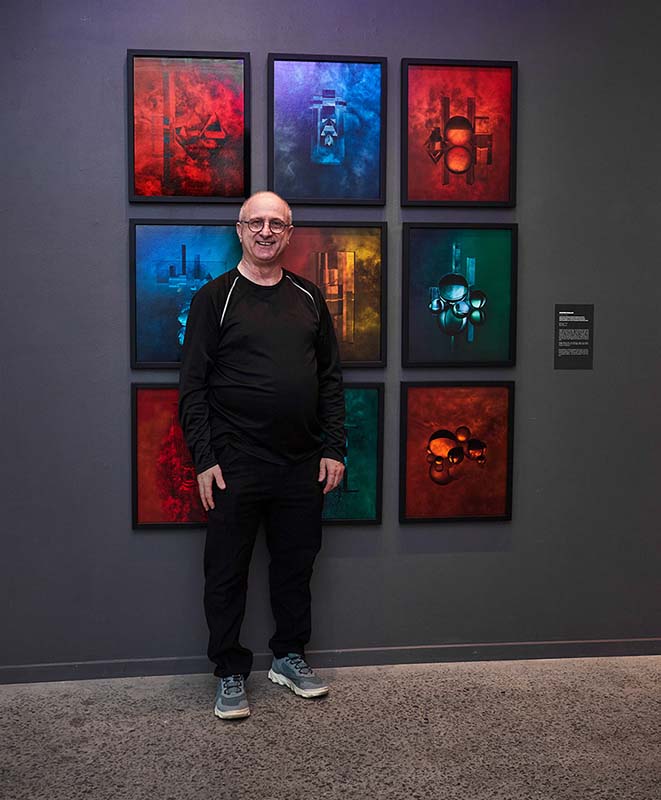
Join club member and print maker Manfred Mueller in examining some of the options we have to make and display prints and to create photo books.
For more on Manfred including many examples of his work visit his website.
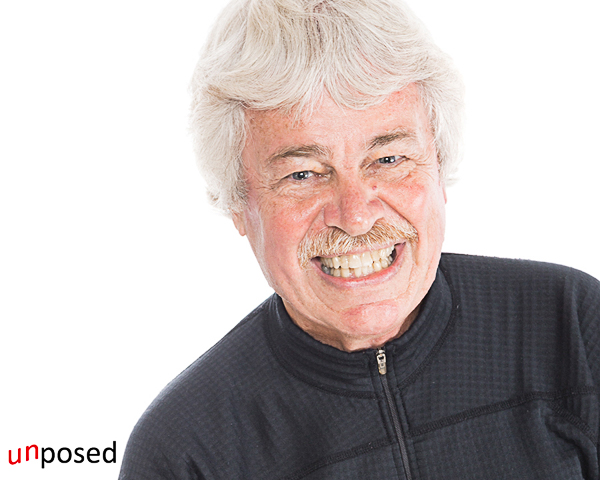
How far do you want to push beyond just Thinking Like a Photographer? At our March 7th meeting, Bill will share his journey on how to be more creative in achieving the desired Image from the captured data. He’ll provide examples of before and after Images and present a few AV Shows. This Presentation focuses on the What & Why, not the How.
Bill’s Artistic Statement
I believe pressing the shutter is only the first step in the photographic process. The photographic Image can be so much more than it was in the past. Modern tools now allow the photographer to more clearly convey to the viewer the artist’s interpretation of the world and of their perception of life. I use a varied tool kit to create an Image that hopefully evokes for the viewer a strong sense of what I experienced and what I felt; not just what I saw.
For more on Bill including many examples of his work visit his website.
We received this invitation from the Lanark County Camera Club to join their photo excursion to Quebec City:
My name is Rob Donald and I am the president of the Lanark County Camera Club (LCCC) in Perth. Jean-Francois Riel of the Orleans Camera Club pointed me to your club and thought that some of your Kanata Seniors Photo Club members might be interested in a two night trip my club is organizing to Quebec City on April 8-10.
We have a 56-passenger coach bus secured for the trip and a guaranteed rate at the Chateau Laurier Hotel in Quebec City. The trip would start and finish in Carleton Place where we have secured ample parking for participants.
We have 20 confirmed participants from my club as well participants from Kingston, Brockville and the CCO photo clubs. Members of your club would be most welcome to join us. Bus tickets are $261.11 per seat.
I am including an information package outlining travel and hotel details. Please let me know if you have any questions.
Regards,
Rob Donald
Lanark County Camera Club
You can contact Rob at:
613-878-7317
presidentoflccameraclub@gmail.com
More details on the trip are available here and here.
This event/outing is not part of the Kanata Seniors Centre Club operations and is not sanctioned by the City of Ottawa. Information is for interested parties.
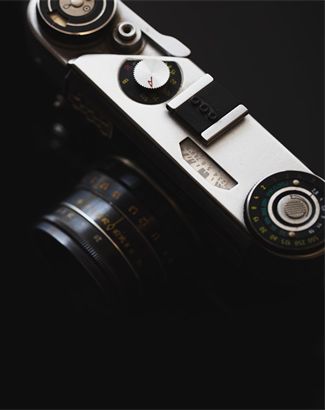
Most of us in our camera club began our photographic journey taking pictures on film. With the advent of digital photography, many predicted the demise of film photography, but this is far from the case today.
In the past few years, there has been a remarkable resurgence of interest in vintage film cameras and lenses, especially amongst young photographers in the 18 to 30-year-old age bracket. Older SLR cameras have increased in value and film is once again being stocked in photo stores.
This presentation explores this “rebirth” of interest in film photography and the allure of old cameras and lenses. The presenters share some of their vintage camera collection as well as photos taken with those cameras. In addition, the audience will learn about ways to recondition old cameras and lenses that may have been languishing in an old cupboard and get them working again. The presentation also reviews the types of film currently available.
Godox V1 (Fujifilm version) mounted on the hotshoe of a Fujifilm GFX 100s ii shot with bounce flash (one of the techniques that we will be covering during the workshop). Flash head is pointed behind and above the photographer.
We will be holding the small flash (speedlight) workshop on Wednesday, December 4, 2024 from 10:00 AM until noon at the Kanata Seniors’ Centre.
Several people have expressed an interest in signing up and it appears likely that the demand for this workshop will exceed the number of spots available. Discussions at the KSCCC Executive Meeting in October recommended that a draw be held to allocate the available spots fairly. This is what we will do.
There will be slips of paper for you to write your name and email address on the tables at the side of the meeting hall, during the break at the November meeting. We will draw eight (8) names just before the end of the meeting and will announce the members who have been selected to attend the December 4 workshop.
Given the high level of interest in this material, we are planning to hold another small flash workshop in the first quarter of 2025, so if your name is not drawn, you will have another chance to attend this workshop.
Please note: The material covered during the workshop is aimed at novice to intermediate-level photographers. To attend you must have your own small flash; either the same brand as your camera or one by a third-party manufacturer that is made specifically for your brand of camera.
The flash must attach to your camera’s hot shoe and have a head that rotates and can be tilted up at least 45 degrees If you do not have this type of equipment or do not know how to use it with your camera, this workshop is NOT aimed at you.
Your instructors will be Ross Laing and Manfred Mueller. Ross holds a diploma in photography from Algonquin College and Manfred holds a diploma in photography from SPAO (School of the Photographic Arts – Ottawa). Both are very experienced flash photographers.
We talk about once-in-a-lifetime photos and often go to places we may never see again.
Then why are we not treating these opportunities as unique and rare, ensuring we fully capitalize on the experience and come back with stunning images and of course amazing memories of our travels.
Using our trip through Nevada, Las Vegas, Death Valley, and Lake Tahoe as an example, this session will look at the Before, During, and After elements of your travel photography.
We start with travel planning, selecting side trips, and formulating an itinerary, plus what to pack. We of course discuss some photo techniques aimed at maximizing image quality and variety, while keeping intact the elements of a “Fun Vacation” for all the members of your travel party. Then, we wrap up with some brief notes on strategies that enhance the visual impact of each image, bringing back the feelings and emotions of being there.
In his presentation, we’ll see some of his thinking processes and techniques as he takes us through the amazing country side of the Nevada desert, Death Valley and Lake Tahoe.
About Mike
Mike joined his 1st camera club over 40 years ago and was immediately encouraged when he started winning photographic awards in local and CAPA competitions. One of the guest speakers at that camera club was a pro who outlined the realities of running a photography business. This really resonated with Mike who had started down the road to weddings, portraits, and events. He then re-focused on photography but just as an avid hobby and artistic pursuit.
A born mentor and teacher Mike instead focuses on sharing his passion and experience with others. He supports several local camera clubs in various capacities and also runs a huge Ottawa-based photo interest group that has grown to over 2900 members under his leadership. He hosts a wide range of photographic opportunities for local photographers of all skill levels.
Hieronymus Bosch, The Garden of Earthly Delights (1490-1519) *Source: Wikipedia
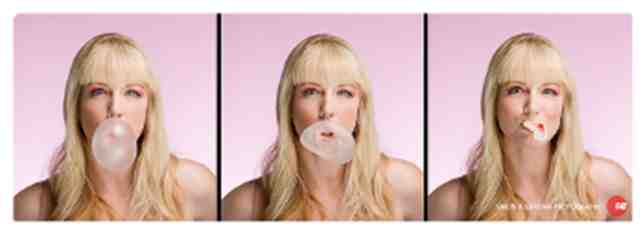
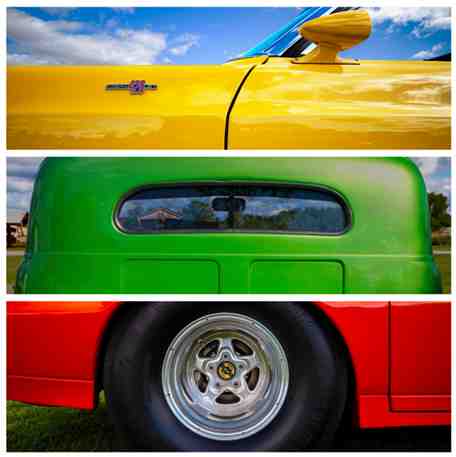
Definition: A triptych is an artwork made up of a series of three images. The three individual triptych images must be interrelated and can explore a particular subject, a specific style, a theme, or even one image that is “split” to create three separate images. In addition, a triptych can show a sequential progression, often suggesting a narrative with a beginning, middle, and end.
Purpose: Ultimately, an effective triptych emphasizes the Gestalt concept of the whole being greater than the sum of its parts.
Background: Triptychs were very popular artworks in the 15th century and usually depicted religious themes. They often had a larger central image with two smaller hinged images on each side of the large image. The two smaller images could be folded over the larger image and therefore protected all three images. More recently, triptychs are created photographic images.
The KSCCC Annual Challenge 2024-2025:
Shoot a photographic series that works as a triptych, whether 3 separate images or one image “split” into three individual images. The triptych can be submitted as three separate images or as one image showing an amalgamation of the three images (i.e. a type of collage). During the 2024-2025 season, there will be several short tutorials during Friday meetings on various ways to collate the three images to present them as one unified triptych image.
Submission Deadline: May 30, 2025 Presentation: June 6, 2025
PHOTOGRAPHIC TRIPTYCH SAMPLES:
Simon Gerniza (Source: Digital Photography School: Diptychs and Triptychs)Toolbuz series by Manfred Meuller: Ant / Cricket / Praying MantisCar Show by Ross Laing
Click here for an interesting history of Alvira Lockwood, Ottawa’s first female photographer, written by Grant Vogl of the Bytown Museum and published by the Historical Society of Ottawa.







 Kanata Seniors' Centre Camera Club