Simple ways to improve your photography

Here are four videos that show some simple ways to improve your photography:

and one to get your mind thinking about next month’s challenge …

SIMPLICITY

 Phil Tughan

Bird Photography at the Monahan Ponds in Bridlewood

[Click on images to enlarge]

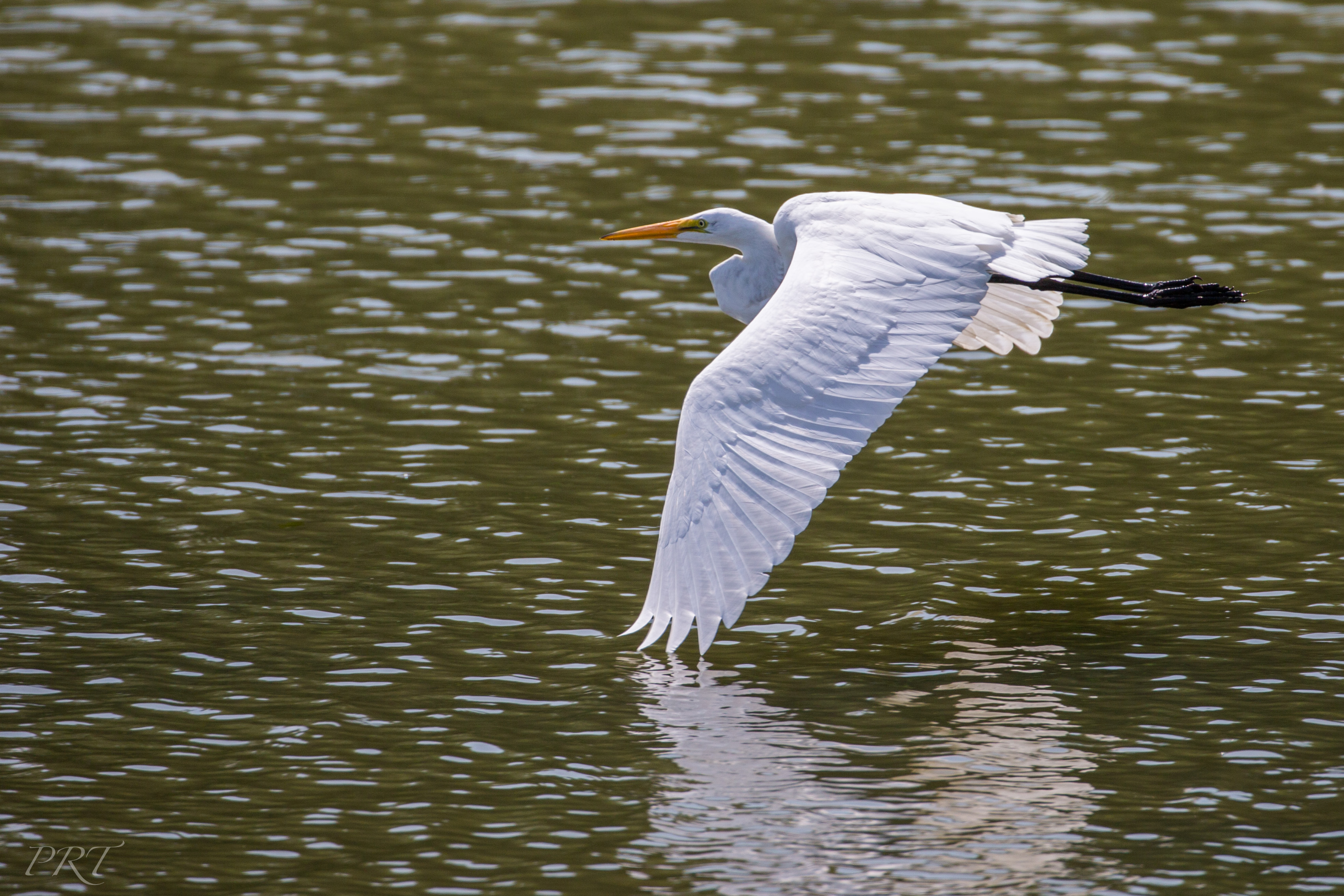
Skim by Phil Tughan
Skim by Phil Tughan


Recently my sister, Anne Jones, and I have been enjoying many trips to the drainage ponds near the corner of Eagleson Road and Hope Side Road to photograph birds. These ponds have been recently redeveloped and have reverted to a very mature and natural habitat surprisingly quickly.

Spear Fishing by Phil Tughan

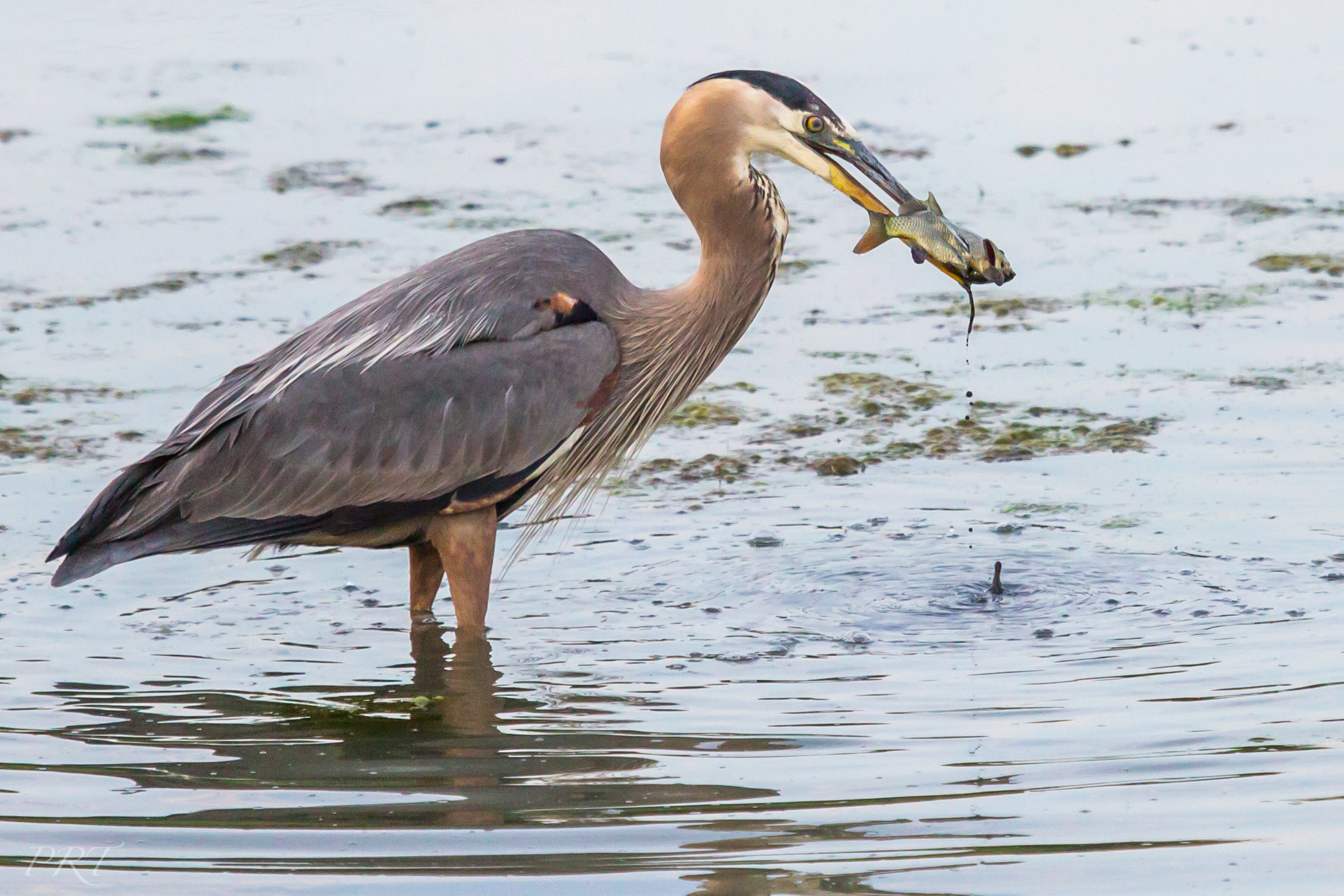
We regularly see and photograph a wide variety of interesting birds there, such as Blue Herons, Green Herons (I think), Night Herons, Egrets, Cormorants, Ducks and Kingfishers, to name a few. There are hundreds of geese there during the migration season. Although it is best in early morning or evening, it is rare to visit any time and not see something. Although not shown on maps, there is now a paved path all the way around the perimeter of the ponds. This makes for a nice walk (almost a 2km loop) with many benches for resting on along the way. A bridge also cuts across the middle for shorter loops. There is lots of civilization around, but also great spots to stop and shoot with good backdrops for in-flight shots.

Overhead by Phil Tughan

There is a great spot to stand (where the path dips down) near the south west corner. Parking is easy. I prefer to park on Emerald Meadows Drive just past where the creek passes under the road and walk clockwise around the ponds. Don’t forget to look at the pond on the north side of Emerald Meadows Drive too while you’re walking by. Parking is also available on Coldwater Crescent and other nearby streets. Unofficial parking is limited off Hope Side Road. A good long lens is always nice to have, but you can often get pretty close to the birds here with pleasing results. Happy hunting.


Gulp by Phil Tughan
Gulp by Phil Tughan


Phil Tughan

Neutral Density Filter Tutorials

Here are some videos on neutral density (ND) filters to go with Phil Tughan’s presentation at the September 1st meeting.

The first is by Joshua Cripps of Joshua Cripps Photography:

Larry Becker put together a very comprehensive 3 part series on ND Filters for B&H Photo – Video in association with Kelby One:

Can’t forget a video from my favourite instructor Mike Browne:

There are iPhone apps and Android apps available for free download to help you calculate what shutter speeds to use with the ND filters.
You can do a search for one the works best for you.

These are fun tools to have available.
Experiment and have fun with it.

by Phil Tughan

ISO and Noise Reduction

I encourage you to view these and many more videos on ISO and Noise Reduction:

Mike Browne from photographycourses.biz on ISO Speed Explained

Tom Greenwood from Sydney Portraits What is ISO? Photography for DSLR Beginners

Marlene Hielema from imagemaven.com Camera ISO: When to use AUTO ISO

Tony Northrup from Northrup Photography “ISO: The Ultimate Guide

  • A VERY detailed and well done presentation which even explains where the term ISO comes from

Matt Golowczynski from Wex Photographic How to Master Noise Reduction in Your Camera

Lynda.com tutorials explains using software Lightroom 4: Reducing Digital Noise

Phil Tughan

Marg’s Tip For June

Nothing Has Impact Like A Print.

June hints - Nothing has an impact like a print.jpgIf you really want to make an impression on people, make a print.  I know it sounds simple, but a printed piece, especially today, is one of the most powerful, impact things you can do for your photography, and the bigger the print, the more powerful the impact.(Scott Kelby personally thinks the impact size starts at 13 x 9″, but if you can go bigger, like 17 x 22″, it really adds impact.  This is a case where bigger is better).
So why do prints have such an impact these days?
  1. Prints are real.  The rest of the time we are looking at images inside a glass screen on a computer.  We can’t hold them.  We can’t touch them.  They are “inside” a box of some sort.  When you make a print, your image is no longer a bunch of Is and Os and a bunch of digital code.  It’s real.
  2. When you make a print, watch the person’s hands right after you hand them the print.  They start feeling the paper.  Touch is one of our five senses, and when you add touch to your visual sense, your image connects with the viewer on a different level.
  3. There is a certain legitimacy to having prints of your work.  It says something about you, about how serious you take your work, and it’s an investment in your photographic journey.
  4. Prints open doors.  If you want to shoot in a particular location (let’s say it’s a restaurant interior), and you take a large print in to show the restaurant owner the type of work you do, my guess is they will welcome you to shoot in their restaurant. It tactically says, “I’m legit – it’s okay to let me do this”.  Believe me it works wonders.
  5. Prints make an amazing gift.  Think of it this way:How much impact does it have when you mail an image to a friend?  Now, make a nice print, sign it, roll it in a tube, and mail it to them the old fashioned way.  You’ll be amazed at the reaction you get.

There’s power in a print.  Try it once, and you’ll see.

Marg Jackman

Focus on the Most Important Part of the Subject

33616705694_98502b3761_o
Lovingly Handing Over the Courting Stick by Marg jackman

Autofocus, often called AF, is a great feature on all digital cameras.AF really does help to ensure that your photo is properly focused most of the time.  This can be a challenge, however, when you are photographing up close.  Then the camera’s AF system may focus on the wrong part of the subject because there are so many places to focus on, all at slightly different distances. Whenever you have objects at varied distances within your photograph, you have the possibility of the camera focusing on the wrong object.

Focus is Narrow when you are Close:
When you get close – and this is not just for close-ups – the area of sharp focus gets narrower. The actual point of focus becomes more obvious.  This means you must become more aware of where the camera is focusing and be sure that the important part of your subject is in focus.
The Camera does not know what is Important:
The camera and its Autofocus have no idea what is or is not important in a photo.  Both simply find something they “know” can be sharp.  You have to tell the camera what is supposed to be sharp, and so you need to watch the focus points and notice which ones light up to tell you what is sharp.
The Eyes of a Person are Critical for Sharpness:
In any portrait, formal or informal, the eyes of the person are the key part of that image.  They tell a lot about the subject, which is why they must be sharp.  If the camera focuses anywhere else, then your photo will be less effective than it could be.
Check where the Camera Focused for Close-ups:
With close-ups, there are many spots a camera can focus on, and they are all very close together in distance.  However, what can be sharp is limited because of the distance.  You may have to press the shutter to lock focus, in order to keep focus on the important parts of the photo.
Marg Jackman

Phil Tughan’s White Balance tech tip for May

Phil Tughan found us these  great videos on white balance:

  • Mike Browne on the basics of white balance
  • Mike Browne on dealing with mixed white balance
  • Phil Steele (uses grey card as reference)
  • Mark Wallace from Adorama TV (uses grey card as reference, but mentions that there are other more accurate tools)
  • Lynda.com (says grey or white can be used but uses white)

and a new twist from Marlene Hielema who says:

  • I’m not talking about White Cards – but White Balance cards. Very big difference. The Canon manual is wrong. 18% Grey cards are for exposure, not for White Balance. In my classroom, I have lined up several 18% Grey cards in a row and they are visibly different colours, because that is not their purpose. Their purpose is to reflect a certain amount of light for metering purposes. You might think they are neutral and maybe you’ll get lucky once in awhile, but they are not exactly neutral.
  • Yes. But 18% grey cards vary the most as they were not designed for colour, but for exposure. So in one of my classes I got all my photo students to bring in their grey cards and we shot them all in one frame and there were many “colours” to choose from.
  • It will be close, and for most people close enough. You really need to do a side by side comparison with a proper calibrated WB card to get the true custom WB. Try the Xrite color checker passport and you’ll see the difference. The 18% Grey cards are printed on paper and will fade quickly over time. Actually all of the calibration cards will.

Marg’s Tip for May

Natural Light in Photography
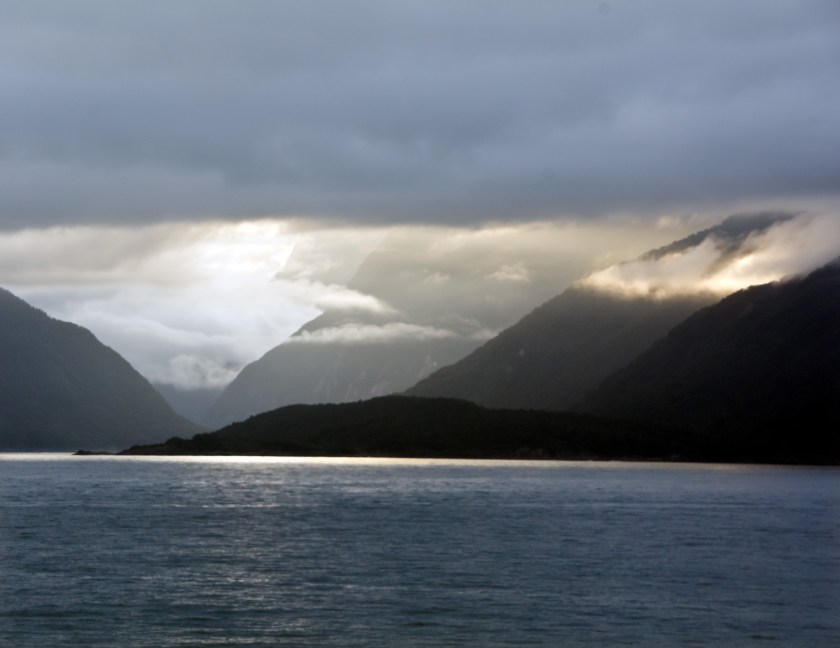
light-1Paying more attention to light is perhaps the most important step you can take to improve your photography.  Different types of natural light can also produce a wide variety of subject appearance even though these all have the same light source.  Three factors influence how natural light renders a subject; time of day, camera direction and weather.
Overview:  Even though all natural light originates from the sun, a subjects illumination is actually composed of several components.

Direct sunlight – warmer, high contrast.
Diffuse Sunlight – cooler, low contrast.
Bounced Light – has qualities of reflecting object.

TIME OF DAY CONTRAST COLOURS DIRECTION OF SUN
Midday Highest Neutral white Near vertical
Evening & Morning High Slightly warm Medium to low
Golden Hour Medium Warm to fiery Near horizontal
Twilight Low Cool pastel Below horizon

Weather:  Along with time of day, the type and extent of cloud cover is the other most influential cause of lighting variation.

Clear Midday Sunshine, is primarily composed of direct downward sunlight.  This results in the hardest and most neutrally-coloured lighting of any time of day. Due to these drawbacks, too often photographers put their cameras away-potentially missing unique opportunities.  For example, water may appear more transparent, since the light penetrates deeper.  If shadows appear too harsh and colours aren’t sufficiently saturated, try converting to Black and White, since these may even benefit from the high contrast of midday light.

Evening and Mid Morning, becomes slightly warmer and begins to cast noticeable shadows.  Subjects appear more three-dimensional.  It is not as neutrally coloured as midday, but not as warm or intense as sunset and not soft and diffuse as during twilight or overcast, but these qualities make it a good all-round time of day for photography, but also run the risk of making photographs appear too ordinary.

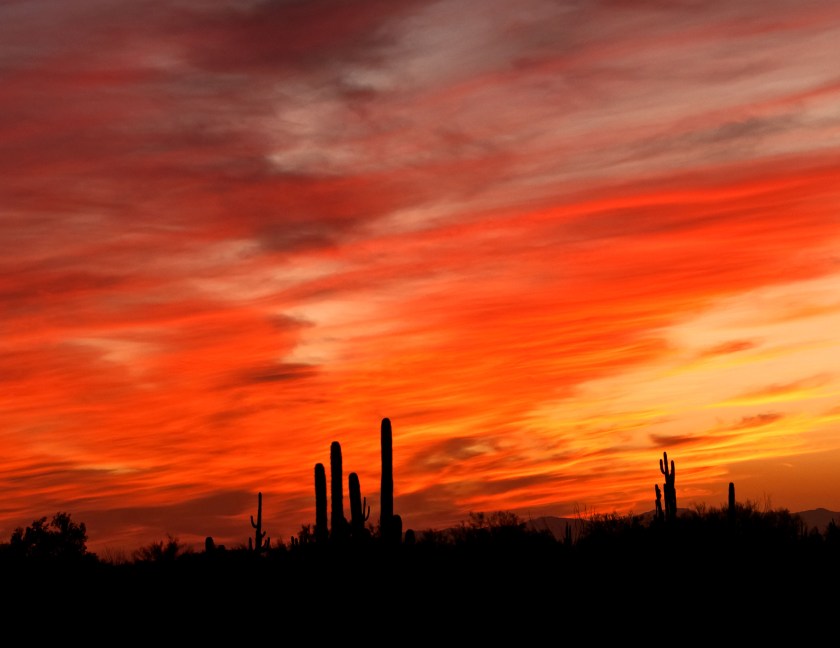
Golden Hour and Sunrise/Sunset are typically regarded as having the most desirable light to photograph.  Horizontal light that cast long shadows and gives subjects a warm glow.  Make sure your cameras Auto White Balance doesn’t counteract an otherwise warm-looking scene.  When the lighting is most dramatic is also when your camera is most likely to make an error with its exposure; take several shots or use partial or spot metering.  Sunrises often have calm quiescent quality particularly with scenes involving water – that isn’t present during Sunsets.

Twilight, Dawn and Dusk typically describes the 1/2 hour before sunrise and after sunset, when the sky is still bright. but there’s no longer any direct sunlight, with one side of the sky appearing warm and reddish and the other becoming a cool blue or purple..  Cameras can often overexpose a twilight scene when using auto exposure, potentially washing out the otherwise delicate colours.

Shade and Overcast Sunlight typically have a cool soft appearance since the source of such light is spread across the entire sky and doesn’t include any direct sunlight.  Many photographers shy away from this type of lighting but doing so is often a mistake.  Depending on the degree of cloud cover, bright overcast light can be ideal for outdoor portraits and wildlife , as can subjects containing both dark and light colours,since it doesn’t cast harsh shadows.  A common trick is to keep grey sky out of the picture unless the clouds are moody and highly textured.  Images straight out of the camera often appear more bluish than desired, so shoot in RAW and adjust White Balance afterwards.
Stormy weather can produce extremely light contrast since rain clears the air of haze and dust.  Sunsets after a storm are also often the most dramatic.

Other scenarios include photographing in the fog, mist and haze which not only decreases light’s contrast but also does so progressively for most distant objects.

Marg Jackman
Get Sharpness With Other Camera Supports

OLYMPUS DIGITAL CAMERA
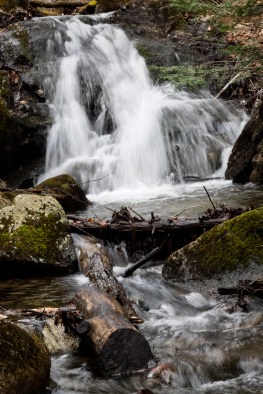
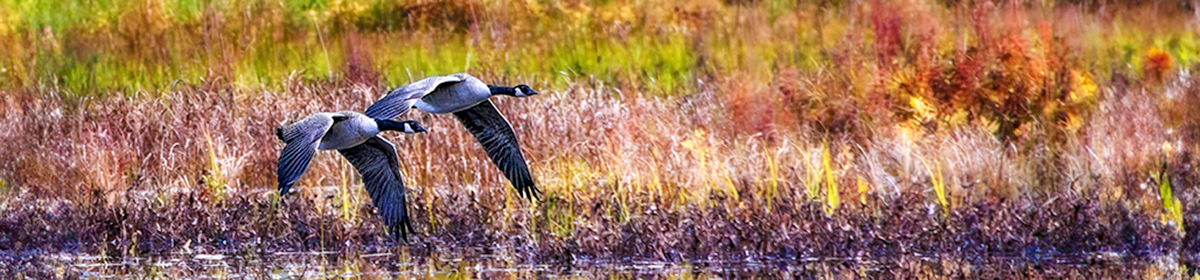
Spring Runoff by Carol Brown

Tripods are not the only option for getting added sharpness when shooting at slower shutter speeds.  Travelling with a tripod can be difficult if you must pack really light.  In addition, tripods can be hard to take to some places, such as when you are photographing along a historic street with some tourists who might trip over them.  Some places even prohibit them.   Tripods can also be awkward to carry and move around in some settings, such as at sports events.  Luckily, you have alternatives.

Beanbags Make very Portable Supports:
Beanbags are very pliable bags against a solid surface.  Some actually have beans inside, although most have plastic pellets.  The bag molds against the camera to help you hold it stable against a post, chair, bookcase, parking meter, or any other convenient, non moving object.
Monopods are  Great for Sports Action:
A monopod is like one leg of a tripod with a head on top.  These are great for shooting sports because the monopod can carry the weight of the camera and lens as you watch the action develop.  They can be used in a lot of situations where you need a slower shutter speed but cannot use a tripod, and you can quickly move out of the way if needed.
Gorillapods Wrap around Objects:
The Gorillapod looks like a miniature tripod with bendable legs.  It comes in different sizes for different sizes of cameras.  Although it can support a smaller camera directly, most of the time a Gorillapod is used by wrapping its legs around a solid object, such as a post.  The unit itself is very lightweight.
Table tripods can help with Small Cameras:
Miniature, folding tripods can fit into a camera bag, and can be opened and used on a table or any other flat solid surface to keep your camera stable during exposure.  The smallest ones can be kept with a pocket digital camera to let you shoot with slow shutter speeds anywhere.
Marg Jackman