Depth-of-Field Tutorials for the April Meeting

This video may be a good primer for Depth of Field and may be a good one to show during the club meeting. It is 6:13 minutes in length.

Part 1- Short Lens by Mike Browne

https://www.youtube.com/watch?v=8uU9O8c7Hss

And here is the other part of Mike’s demonstration where he pulls it all together

Part 2- Long Lens by Mike Browne

https://www.youtube.com/watch?v=98-WvzWvt7M

This one is pretty basic and is fairly easy to understand

By Cam Crunch

https://www.youtube.com/watch?v=iHxG1f3X1f4

This one is a bit more technical and is explained with drawings. While a little harder to get your head around, it may help to shed light on the concepts in a different way.

By Dylan Bennett

https://www.youtube.com/watch?v=34jkJoN8qOI

Some good tips on shooting photographs that require a very wide depth of field.

By lynda.com

https://www.youtube.com/watch?v=XlQaiCPTFS4

(Hint: Also, search YouTube for “Hyperfocal Distance”)

Some good demonstrations on shooting portraits with a shallow DOF

By Adorama TV

https://www.youtube.com/watch?v=OUYuUs1aaCU

There are many Depth of Field Calculators available online and in Apple and Android environments. You can simply dial in your Camera Sensor Size, Aperture Value, Focal Length and Distance to Subject. The DOF calculator will give your DOF for those values.

Phil Tughan

Marg’s Tip for April

Figure Out What Type of Photographer You Are

april-hints-figure-out-what-kind-of-photographer-you-are

You should try shooting all sorts of stuff – from food to landscapes, from portraits to sports, from products to travel, and everything in between.  When you are just starting out, shoot everything. And once you have done that, sit down and figure out what kind of photographer you really want to be and work on that.

The first step is to take a good look at the stuff you’ve been shooting and ask yourself, “Which one of these do I seen to have knack for? Or, Which shots have people told me I have a knack for?  Chances are there is something you shot that you particularly felt you had a knack for – you just kind of knew what to do.

Okay, that’s step one (and it might be more than one thing – you might feel like you have a knack for travel, sports and natural light portraits, and that’s okay).  The next step is to ask yourself, “Which one of these do I really enjoy shooting?”  This is really important, because this is what you should be focusing on.  There’s no sense at getting really good at product photography when what you really want to be is a natural light portrait photographer.

But, few photographers, even more experienced ones, really sit down and think this through – they just shoot what comes their way.  And while they may wind up being competent at shooting a lot of different things, I’m guessing being competent isn’t your goal (it’s like getting a C+ in class).  Finding who you are as a photographer allows you to focus your learning, your energy, and your time in the right direction.  When you start to get good at what you really enjoy, this is when the magic happens.

Marg Jackman


Orchidophelia

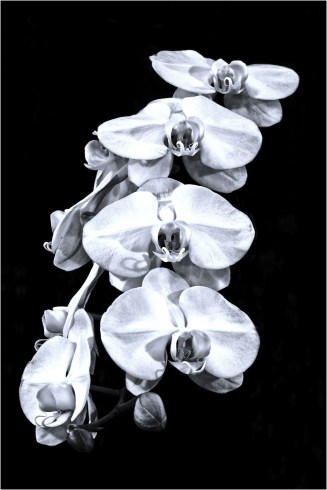
orchids by Ron Pierce
Orchids by Ron Pierce

For a chance to shoot some spectacular flowers, visit the orchid show which is back at the RA Centre on the weekend of Saturday April 22 from 12:00 to 5:00 and Sunday April 23 from 9:00 to 5:00.

For more details check out their website. They encourage photography but limit the use of tripods to Sunday the 23rd from 9:00 to 11:00

To see a few examples of images shot by club members at a past show look at our May 2014 gallery.

World Backup Day!

wbd_horizontalDid you know that Friday March 31st is World Backup Day?

If your computer or smartphone failed tomorrow or it was infected with ransomware, all the files it contains could be lost! Would you lose all your precious photographs?

Do you have a backup plan in place?

If you need help with setting up a backup procedure why not book an hour with one of the Seniors Council’s computer tutors? They can help you set up a safe, thorough and automatic backup procedure for all your files.

Aperture Paradox

Question:  If “fast” lenses are better, why are so many images taken in the “normal” aperture range?
Answer: The big advantage of “fast” lenses ( and the reason they are called fast), is that they have wide maximum apertures, and so make faster shutter speeds available in low light, without having to bump up your ISO too far.  Another advantage is that wider apertures enable a tighter depth of field, and this is often used to blur the background (or foreground) in portraiture and still life photography.  Even so, for general shots, you’ll typically use an aperture of around F/8.  This is usually the “sweet spot” of a lens, at which it delivers optimum image quality.  Similarly, in many situations you may not want to minimize depth of field – when you want to get both eyes sharp in a portrait of someone sitting three-quarters on, for example.
Marg Jackman

Critique of Photographs

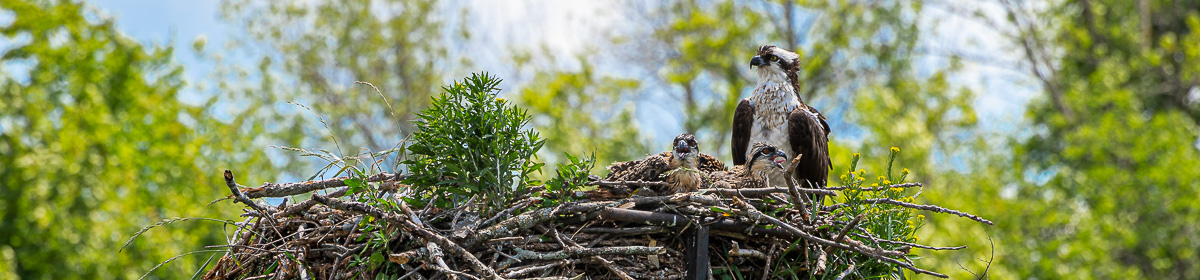
Cooper Hawk By Anne Jones
Cooper Hawk by Anne Jones

General Guidelines

It is hard for a photographer not to be sensitive to remarks about changes and possible improvements to ones’ photographs.  Remember the comments are on the photographs not the photographer.  Some of the comments will carry with them the bias of the reviewer.  As an example a world class female reviewer once told me about this problem by saying:   “I hate snakes, so it is real hard for me to give a good review on a snake, no matter how good and wonderful the photograph may be.”

Also there are no definite rules of what makes a bad or great photo which have come to us from Mount Sinai.  Even generally accepted rules, such as the “Rule of Thirds” can be successfully broken.  For those who do post processing remember there is never a photograph taken that cannot be improved in some way – including how it is framed. Now on with some basics of doing a critique.

Basic Critique Considerations

  1. Is the photo properly focused, with foreground, main subject, and eyes (usually) sharp?
  2. Is the background appropriate, or is it too busy/cluttered? Does it have best focus or out of focus areas appropriate for image?
  3. Does the photo display a good depth of field for subject and treatment of subject?
  4. How is the exposure?  Is it too dark (underexposed), too light (over exposed). blown out, blocked up, or okay?
  5. How is the image contrast?  Flat with little tonal difference or too extreme?
  6. Are the colours accurate or appropriate for subject?  Are there overlaps or bleeding, too much saturation or not saturated enough, or other colour issues?
  7. Is the composition pleasing, properly balanced, and appropriate? Do objects in images give a 3-D effect? Does use of framing, leading lines, image placement, or other composition components, indicate direction or movement, and does this improve the image or distract from it?
  8. Is cropping required, or is there to little or too much cropping to flatter main subject/topic?
  9. Is your eye drawn to the best spot/subject of the image first, and does your view stay within the main subject/topic of picture or are there bright, dark, or highly colourful distractions?
  10. Is it easy to determine what the best spot or subject is?
  11. Is there a clear story line or message in the photo?
  12. Is there a uniqueness or rarity to captured scene or captured item?
  13. Does the photo carry emotional appeal, such as babies/moms, puppies, love, danger, and so on?
  14. Are there any technical issues which distract from the image quality or appeal?

One of the best ways for a photographer to improve is by having their work critiqued.  Even though one may not agree with critique points made, the process helps one identify what appeals to the viewers and what does not.  With this understanding you are better able to create the best photograph you or a viewer likes.  The more you practice and apply your knowledge the better photographer you will become.

Based on this post by Scott Bourne in the Photofocus blog.

Frank Knor

Ted Simard on Lightroom

Thanks again to Ted Simard who gave us a great presentation on Lightroom at the March 3rd meeting.

A little bit of Ted’s background:

  • 50 years photography experience
  • started with black and white and film
  • learned camera settings prior to in-camera light meters
  • using Lightroom and RAW since 2015
  • owns Nikon D500 plus 2 zoom and 4 prime lenses
  • self taught
  • official photographer for Robert Stanfield political campaign in the 70’s and Church of Canada Truth and Reconciliation Commission
  • teaches photo classes at Trinity Presbyterian

He recommended these websites for more information:

Marg’s Tip for March

2-march-hints-for-nature-and-wildlife-tips-huntington-beach-8-d2745Nature and Wildlife Photography Tips

Before heading out, do your homework.  Be as educated as possible, before you ever make a photograph, though you never can be totally prepared.

What Gear to Pack

A good bag is worth its weight in gold.  All the planning in the world isn’t worth much unless you can comfortably carry your essential tools with you. Find a camera bag that can carry the gear you need easily and is especially comfortable on your body.. Bags range greatly in price and quality, but you usually get what you pay for.  For added piece of mind, you might consider a bag that is semi-waterproof or water-resistant.  A rain cover is also a useful addition.

Shoes

A good pair of hiking shoes or boots is one of the most important pieces of gear for any Nature or Wildlife photographer.  Grit, Dust, mud, Insects, rocks and creepy crawlies – you need a pair of shoes or boots that can handle all these elements.  If your feet become uncomfortable, it won’t be long before you start thinking about cutting your trip short.

Prepare a Checklist

It’s always a good idea to have a mental checklist before beginning.  Ask yourself the following questions:
  • Are any Special Permits or Permission Required?   Some National or State parks and Wildlife Sanctuaries require special permits for access to certain areas, especially those deemed as back country environments.
  • Where Will I Leave my Vehicle?  If you park your vehicle in an unauthorised area, you will be stuck with a sizable fine or worse, return to your vehicle to find it had been towed.
  • Are There any Time Restrictions of any Kind? Most natural areas and parks have hours of operation just like a business.  You might arrive expecting to shoot a great sunrise, only to find out the location you chose isn’t accessible until after daybreak.    Also remember that wild creatures and critters are usually most active in the early morning or late evening.
  • What are the Expected Weather Conditions?   This is a biggie.  Know what to expect as far as the weather is concerned.  Check the forecast the day of departure and keep tabs on it throughout the day if possible.  NEVER chance endangering yourself or your equipment by venturing out unprepared for bad weather.
  • What are the Times for Sunrise and Sunset?      Make sure the places are accessible during those times and be aware of the schedule so that you can allow enough time to reach your location and set up your gear before it’s go time.
  • Are There Any Commonly Photographed Animals, Landmarks or Structures?     Research what is usually photographed around the area you plan to visit.  Find a park ranger or staff member and ask about lesser known spots that are less travelled by tourists.  Knowing what’s popular will save you time and help to avoid shooting a scene the same way it has been done, time and time again.  Look for ways to be creative and set your work apart.
Here are a few basic tips that can help you after you reach your destination.

Shoot Raw

Raw files are basically unprocessed, one might say uncooked, straight from your camera’s image sensor.  They contain a mass amount of pixel information. When compared to JPEG, they take up a lot more memory card space.  However the added information allows more latitude for adjustments in post processing.

Use the Lowest Practical ISO

The ISO number of photography film and image sensors relates to their sensitivity to light.  The higher the ISO number the less light is required to make an image, however this can increase the noise.  There are times when a fast shutter speed is often needed to capture the quick movement of wildlife and increased noise is far less noticeable than a blurred image.

AF Can be Your Best Friend or Your Worst Enemy

A great tool when photographing most wildlife and keeping a moving subject in focus.  Place your selected focus area over the subject and half press the shutter button to engage AF.  Focus will be tracked for as long as you follow your subject while maintaining pressure on the shutter button.  Read your camera manual for detailed information.

Don’t Forget the Tripod

“I really think I would need my tripod” are words that usually begin a sad story about how a potentially great shot is missed.  It’s better to have access to one and not need it, than to need it and not have one available.
Learn so you can prepare. Prepare so you can photograph.
Photograph so you can Grow.
Photographing wildlife can be difficult but it can also yield huge artistic, personal and even spiritual rewards.  So go out and have fun doing what you do, but don’t forget to put the camera down every now and then to enjoy the world around you.
Nature never goes out of style.
Marg Jackman