Marg’s Tip for September

Using Natural Framing to Improve Your Composition

Framing_.3._

To help you compose more exciting and beautiful photographs there are certain key techniques that you can use. Using framing can create extremely impressive and elegant images when done right. Here are some tips.

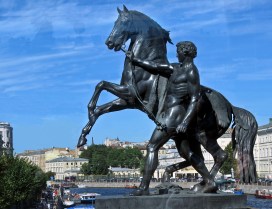
Natural framing is when you use an element within your image to frame the subject. This draws the eye into the photo and highlights the actual subject. The internal frame can be constructed using a multitude of things you’ll find anywhere – branches, archways, tunnels. door frames etc. as well as things that aren’t solid like light, shadows, rain, fog etc. – it doesn’t matter what you use. Framing is a technique to use sparingly.
Why should you use natural framing?

  • it easily draws your viewer’s eye into the photo and emphasizes the subject.
  • it brings a sense of order and structure to a photo and the eye loves order.
  • to obscure boring sky.
  • to add depth to an image – especially when the item acting as a frame is not in focus.
  • to bring contrasting elements into the photo without detracting from the subject.
  • to create structure.
  • to create a feeling of a self-contained image, particularly if you are photographing something quite ordinary and simple, a frame will help give depth to the subject.

Natural framing is one of the hardest rules to pull off well. Many people use it to make a boring landscape or scene more interesting. If your subject is boring, no technique is going to liven it up. Framing should be used as an additional interesting element – not as an overlay to a mundane scene.

  • a photo looks more natural and pleasing for the frame to take up 2 or 3 sides of the frame.
  • when the frame is out of focus it creates a sense of depth in the image.
  • the frame can be made from different elements – the colours can be the same and have interesting shapes.

Natural framing is a very good way to remember that you are in control of how the viewer’s eye will go around the image. Your job as photographer is to direct the eye.
As a photographer you need to make sure that everything you put in a frame is saying something that you want it to – that the elements are all working together to form the idea and feeling that you seek.

  • what am I feeling here?
  • what is interesting to me in the scene?
  • why is this important?

A final thought from Henri Cartier-Brisson
“You just have to live and life will give you a picture”.

Next Camera Club meeting

Meeting delayed one week

Because of the Seniors Centre open house on September 2nd, the next meeting of the Kanata Seniors Center Camera Club will be delayed until September 9th, 2016 starting at 9:15 at the Kanata Seniors Centre, 2500 Campeau Drive, Kanata Ontario K2K 2W3.

Assignment

Please  note: All assignment and review images must be sent to the club’s email before noon, Friday, September 2nd, 2016.

Due to the extended summer break, at the June meeting the club gave three separate topics for the summer assignment:

Summer – images depicting your concept of summer. This could be your kids playing in the yard, a family bar-b-que, playgrounds, end of or start of school, festivals, the outside, the sun or anything else that your imagination would consider to represent “summer”.

Water – images that show water. This might be a poolside shot, images from a trip to the beach, the lake, river, ocean or any other body of water, kids running and jumping through the sprinkler, puddles after a rainstorm, just to name a few suggestions. Let your imagination run wild.

Gardens/gardening – images that show either the act of gardening, or the resulting gardens. This becomes a fairly broad topic that could show either world class gardens you have visited on your travles, right up to you own garden at home. beautiful images of flowers, shrubs, vegetables, even just lawns are just a few of the full range of shots that could reflect this theme.

Images are due before noon Friday September 2 2016.

News

At a recent meeting of the executive of your club, the newsletter shutterBUG was discussed. In basic terms, all of the information that was put into the newsletter is all readily available on the website, under the tab of “news” or elsewhere on our site. This being the case, it was felt that the newsletter is redundant. Considering the effort that went into putting the newsletter together, and considering the previous assessment, we have decided to cease production of the shutterBUG effective immediately. As such, there will be no further issues, June 2016 will be the last production.

Scheduled Club Shootouts

Your club has made plans for various “Shootouts” over the coming year. Details of the following “Shootouts” will be provided and/or reviewed at the next meeting:

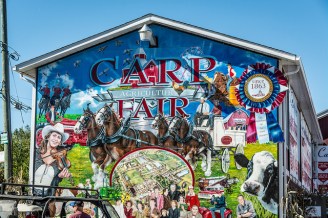
Carp Fair

  • When: Thursday, September 22nd, 2016 starting at 6:00 pm
  • Meeting location: The Rotunda building, located at the Carp Fairgrounds
  • Topic: The fair activities including, since this is an evening event, the midway, rides, etc.
  • Rain date: Friday, September 23rd, same time and place.

Butterfly Show

  • When: Wednesday, October 5th, 2016 starting at 9:30 am
  • Meeting location: Carleton University Campus The Nesbitt Biology Building
  • Further Activity: get together for lunch (at your own cost) in the cafeteria in the University Centre Food Court building starting at 11:00 am


Becoming a Travel Photographer

Amy Lo has pointed out another free course on the Creative Live web site titled Becoming a Travel Photographer. While it seems to be aimed at commercial photographers, it does sound interesting and we all love to travel.

Here’s their description of the course:

Get Paid To Travel By Capturing And Telling Unique Stories

The world is full of unique and beautiful places. By learning the business behind travel photography and mastering how to capture and write those stories, you can get paid while filling up your passport; more importantly, you can brand yourself as a travel photographer.

Laura Grier is a photojournalist who has made a life out of exploring the world, capturing, and writing about her experiences. She has worked for National Geographic, Huffington Post, and is the owner of Beautiful Day Photography (one of LA’s most highly regarded destination wedding companies). In this class she’ll teach you:

  • How to break into the travel photography world
  • How to pitch story ideas and get trips funded
  • How to prepare for destination and travel shoots

It will air for free July 28th and 29th. After that, it will cost $99US

Free Beginning Photographer Course

Creative live is running a free online course for beginning photographers starting Monday July 11th and ending Friday July 15. You’ll learn:

  • How exposure works and how each setting creates a different effect
  • The basics of different shooting modes (Auto, Program, Shutter/Aperture Priority, Manual, etc.)
  • How to make use of your camera’s functions – flash, white balance, exposure compensation, timer, and focus points.
  • How image size and resolution work, and why it matters (or doesn’t)
  • How to choose and use different lenses.
  • The best resources to download, backup, and share your images

Thanks to Amy Lo for sharing this with us.


Fundamentals of Photography Course

July 4-6, Creative Live is presenting “Fundamentals of Photography“, a free online course given by John Greengo. Quoting from their web site:

Build A Strong Foundation For Your Photography Practice.

As a photographer, you will need to master the technical basics of the camera and form an understanding of the kind of equipment you need. The Fundamentals of Digital Photography will also teach something even more important (and crucial for success) than the mechanics of digital photography – how to bring your creative vision to fruition.

Taught by seasoned photographer John Greengo, the Fundamentals of Digital Photography places emphasis on quality visuals and experiential learning. In this course, you’ll learn:
  • How to bring together the elements of manual mode to create an evocative image: shutter speed, aperture, and image composition 
  • How to choose the right gear, and develop efficient workflow 
  • How to recognize and take advantage of beautiful natural light 

John will teach you to step back from your images and think critically about your motivations, process, and ultimate goals for a digital photography project. You’ll learn to analyze your vision and identify areas for growth. John will also explore the difference between the world seen by the human eye and the world seen by the camera sensor. By forming an awareness of the gap between the two, you will be able to use your equipment to its greatest potential.

Amy Lo and Anne Jones are both big fans of the Creative Live courses. Amy says:
“Anne Jones introduced me to this workshop several years ago and since then I have been attending it every year, and I always learned something new.”
Reserve your place here.

Old Quarry Trail Photowalk: Results

Thanks to Ken Wilson and Anne Jones, here are pictures of the club members who participated in the Old Quarry Trail photowalk held on June 23rd:

imagespacerOQT Group by Anne Jones

and to Phil Tughan:

_MG_8992spacer_MG_9001spacer_MG_9025spacer_MG_9010

Shirley LeClair:

Lea wf shadowsspacerPurple w  cloverspacerstruggling w turtlespacer

He loves me w loves me not

Ken Wilson:

image2spacerimage1spacerimage3

Anne Jones:

Bird Sillouette by Anne JonesspacerChippy on a Log by Anne JonesspacerChips Away by Anne Jones

and Amy Lo:

Butterfly by Amy LospacerI'm Stucked by Amy LospacerLet me Catch my Breath by Amy Lo

for sharing some of the great images they shot.

California Academy of Sciences Nature Photography

The California Academy of Sciences sponsors an annual competition of nature photography about which they say:

Our annual BigPicture: Natural World Photography Competition seeks to inspire environmental stewardship through the power of imagery. Professional-level photographers are encouraged to submit work that celebrates and illustrates the diversity of life on Earth.

The 2015 winners are here and the 2016 winners here.

The 2015 winners are also available here as a downloadable PowerPoint slideshow.

Thanks to Fraser Campbell for sharing this with the club.